Connecting with healthcare leaders at Digital Health Week 2025 in Christchurch

Last month, the RosterLab team attended Digital Health Week 2025 in Christchurch, joining more than a thousand delegates from across New Zealand’s health and digital health community.
For us, it wasn’t just another event on the calendar. It was a chance to bring RosterLab into real conversations with the people who manage rosters, respond to staffing gaps, and keep services running - often under intense pressure. We were proud to showcase our AI rostering platform, but even more importantly, we listened. And what we heard from healthcare teams was consistent, candid, and incredibly valuable.
What we heard from delegates
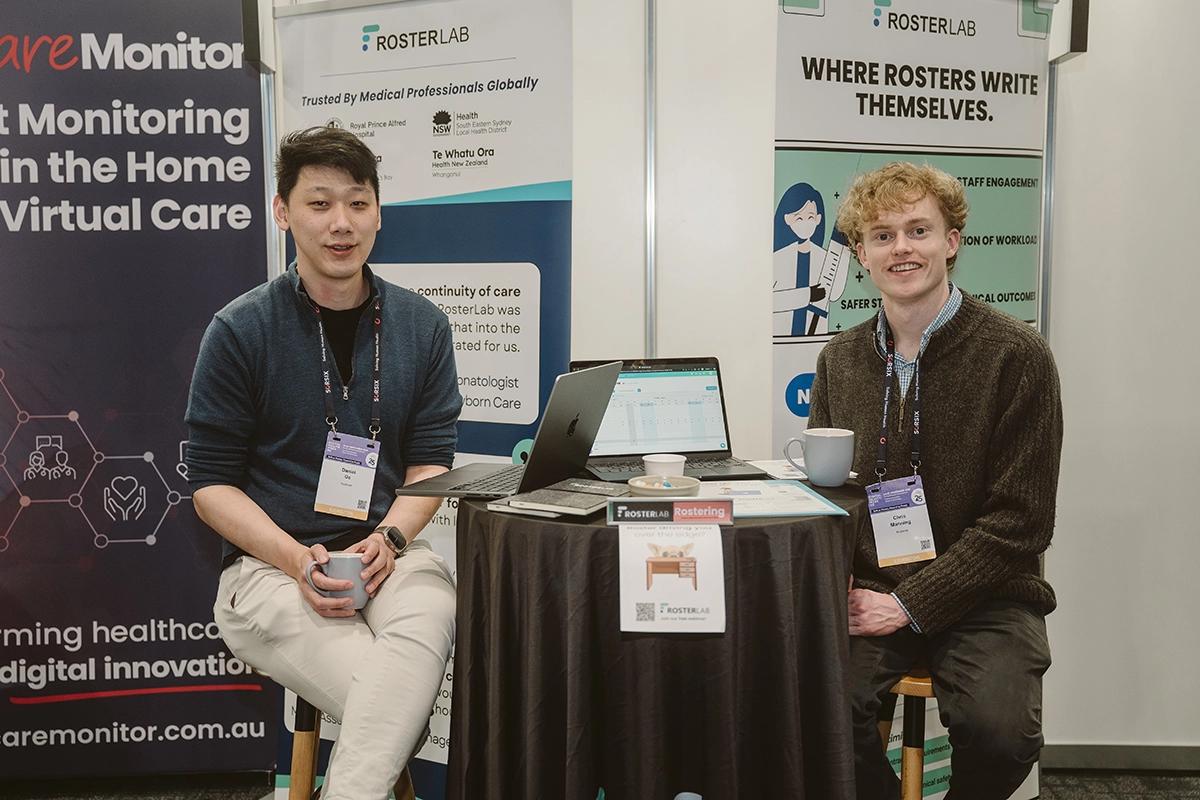
Health Informatics NZ it HiNZ, www.hinz.org.nz / Bethany Howarth Photography https://www.bethanyhowarth.com
Across the week, a clear theme emerged: rostering isn’t “just admin”- it’s a daily operational challenge that shapes staff wellbeing, patient safety, and service reliability. A deeply human problem.
Many delegates described rostering processes that still rely heavily on spreadsheets, email chains, paper notes, and institutional knowledge. In some teams, one or two people hold the whole system together. When they’re away, everything slows down. When last-minute changes happen (and they always do), it becomes a reactive process of patching gaps, phoning around, and updating multiple versions of “the roster” across different tools.
We also heard repeatedly that last-minute change is the norm, not the exception. Sick leave, surge demand, unexpected admissions, redeployments, training requirements, and fatigue management all create constant movement. Delegates spoke about the “domino effect” of a single unplanned absence and how quickly a roster can unravel - especially in smaller teams and specialist units where skill coverage is tight.
Another strong theme was fairness. Delegates talked about how sensitive rostering can be, particularly around weekends, nights, public holidays, and unpopular shifts. Even with the best intentions, it can be difficult to maintain perceived fairness across months and teams, and harder still to show why certain allocations were made. When the logic is hidden in spreadsheets or in someone’s head, frustration builds quickly and small issues can turn into bigger disputes.
Compliance and policy complexity came up frequently as well. Healthcare rosters aren’t simple. Delegates discussed the challenge of balancing safe staffing expectations, fatigue considerations, internal policies, employment agreements, and role-specific rules. Many teams feel stuck between doing what’s operationally necessary and ensuring everything remains compliant - and the mental load of checking all of those constraints, every time something changes, is significant.
Underlying all of this was the real cost: time and pressure on people. Inefficient scheduling isn’t just a process problem - it creates stress for coordinators and managers who are already juggling competing priorities. It also affects frontline staff who experience frequent changes, inconsistent work-life balance, and uncertainty about upcoming weeks. The message was clear: the roster touches everything.
Why these insights matter

Health Informatics NZ it HiNZ, www.hinz.org.nz / Bethany Howarth Photography https://www.bethanyhowarth.com
Hearing these challenges firsthand reinforced something we believe strongly: rostering is one of the most powerful levers in healthcare operations. Done well, it supports safer staffing, more predictable workloads, and a better experience for staff. Done poorly - or simply done with tools that aren’t designed for modern complexity, it can amplify strain across the entire organisation.
Digital Health Week was a reminder that meaningful transformation doesn’t come from technology alone. It comes from technology that fits the realities of healthcare work: the constraints, the pace, the people, and the constant need to adapt.
Looking ahead
The conversations we had in Christchurch were energising. They reminded us that the challenges healthcare teams face are complex - but not unsolvable. The sector is full of practical, mission-driven leaders looking for tools that genuinely help, not tools that add another layer of complexity.
We left Digital Health Week with new perspectives, stronger relationships, and a clear sense of what matters most to the people living this problem every day. Those insights will directly shape how we continue to build and improve RosterLab.
A special thanks to Health Informatics New Zealand (HiNZ) for having us and for bringing together such a strong community of innovators, clinicians, digital leaders, and operational teams.
And to everyone who stopped to share their challenges, ideas, and hard-earned lessons - thank you. If you’d like to continue the conversation about AI rostering, workforce efficiency, or what “good” looks like for scheduling in your context, we’d love to connect.
You might also be interested in


Ready to Transform Your Workforce Management?
Join thousands using RosterLab to streamline rostering.