What Actually Matters When Implementing AI in Healthcare: Reflections from Australian Healthcare Week

Learnings at a glance
- AI in healthcare has moved from hype to real-world execution, the gap is now implementation, not imagination
- People and culture determine success far more than the technology itself
- Low-risk, non-clinical use cases are where adoption is gaining real traction
- Change management isn't optional, AI makes it more necessary, not less
- Workforce pressures are the honest driver behind most AI investment
- Clinical decision-making AI still faces a trust deficit that won't be solved by capability alone
- The organisations pulling ahead are those who started experimenting early and built internal capability

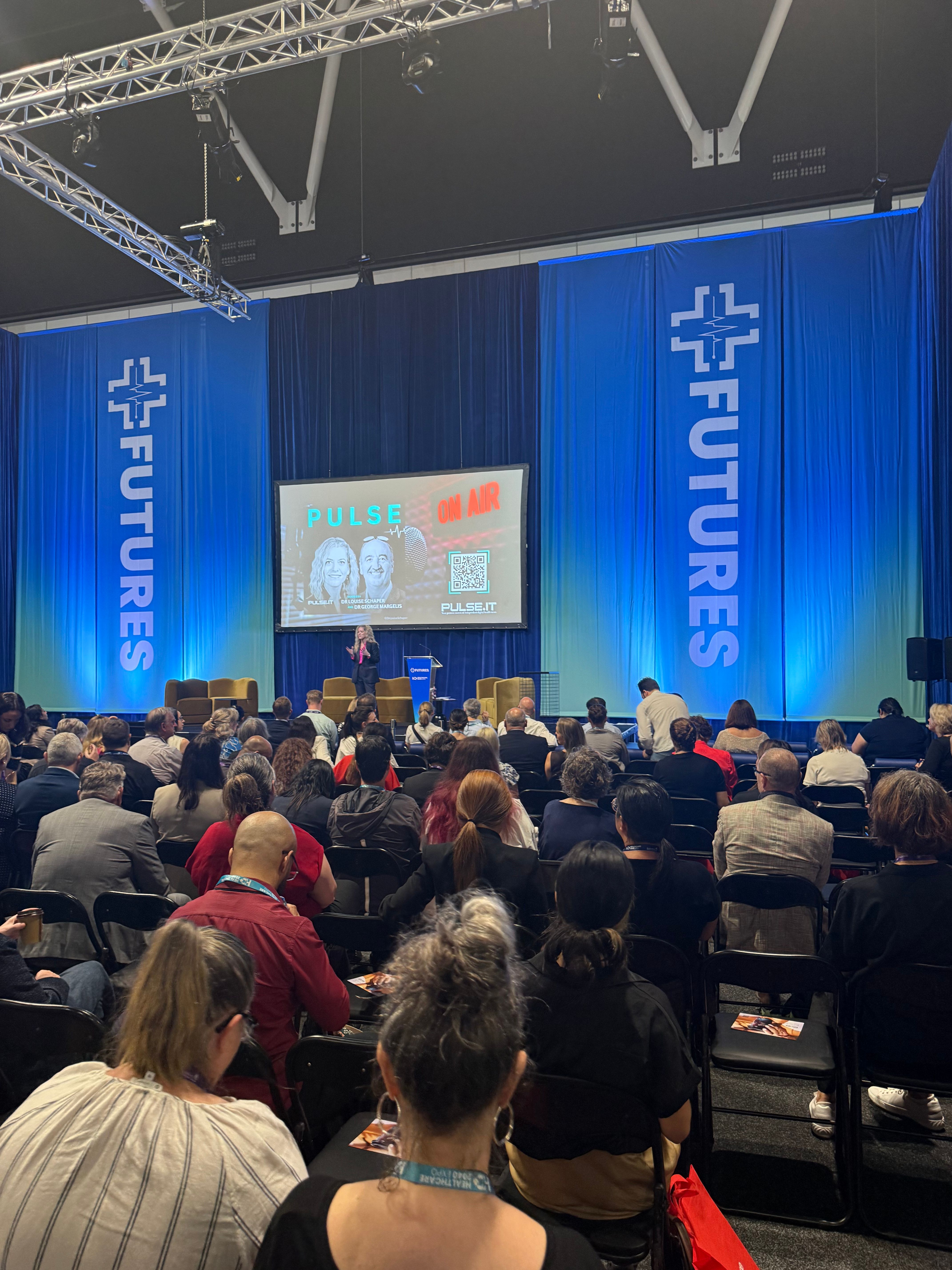
In March, I spoke at Australian Healthcare Week in Sydney, the largest healthcare event in the Southern Hemisphere, drawing over 10,000 attendees, 500+ speakers, and 200+ sessions. It's the kind of room where clinicians, executives, policymakers, and innovators are all in the same building at the same time, which makes for genuinely interesting conversations.
I was part of an expert panel on the realities of AI in healthcare alongside:
- Andrew Hii, Partner (Technology & IP) at Gilbert & Tobin
- Dr Didir Imran, Senior Medical Practitioner and Associate Professor at Deakin University
- Dr Andrew Blanch, Senior Clinical Advisor at eHealth Queensland and Paediatric Emergency Physician
What struck me most was the shift in tone from previous years. The question is no longer "could AI transform healthcare?"… that debate is over. The question now is "why do some implementations succeed while others stall?"Here's what the panel converged on.
1. Real impact is already happening… just not where you expect
It's tempting to fixate on headline AI deployments: large clinical systems, ambitious hospital-wide rollouts. But some of the most compelling examples we discussed were far more grounded. Internally built automation solving one specific workflow problem. A tool that saves a team 20 minutes per shift. These are the types of wins that hardly get press releases.
The pattern is consistent: impactful AI is often small, targeted, and closely aligned with how teams already work. It doesn't have to be vendor-led or high-visibility to be genuinely valuable.
2. The biggest barrier isn't the technology
This is the point that generated the most agreement across the panel. Organisations that succeed with AI tend to have internal champions. These are people already experimenting with AI in their daily work who understand both its capabilities and its limits. That combination of enthusiasm and pragmatism is rare, and it makes an outsized difference.
We see this directly in workforce and rostering contexts. Even when the system is technically sound, adoption comes down to trust. Clinicians need to believe the outcomes are fair and transparent. Without that, engagement collapses, regardless of how good the algorithm is.
3. AI doesn't remove the need for change management. It raises the stakes
There's a persistent misconception that AI somehow simplifies implementation, that you deploy it and the friction disappears. In practice, the opposite is true.
The fundamentals still apply: training, process redesign, stakeholder alignment, sustained support. Organisations that treat AI as plug-and-play tend to struggle. Those that approach it as a broader transformation effort, with change management baked in from the start, are the ones that see results. At RosterLab, this is something we're deeply committed to. It's why we work closely alongside clinical champions rather than handing over a system and stepping back.
4. Low-risk use cases are leading adoption, and that's the right call
Most organisations are starting where risk is lowest and value is clearest: administrative automation, documentation support, workforce management. These use cases improve efficiency without introducing direct clinical risk, and they create space to build capability and confidence over time.
There's also a harder truth underneath this: workforce shortages and operational pressure are the real drivers of AI investment in healthcare right now. AI isn't replacing clinicians, but it is helping strained systems function more effectively around them.
5. Not everything is ready for AI, and that's okay
The most encouraging sign at the conference was the healthy realism emerging around clinical decision-making. The potential is clear, but so are the barriers: trust, accountability, safety, evidence. Widespread adoption in clinical AI will take more time, more validation, and more proof than other domains.
The organisations that will win long-term aren't the ones rushing AI into every corner of their operations. They're the ones building the internal capability, the trust infrastructure, and the cultural readiness to expand thoughtfully when the time is right.
You might also be interested in


Ready to Transform Your Workforce Management?
Join thousands using RosterLab to streamline rostering.